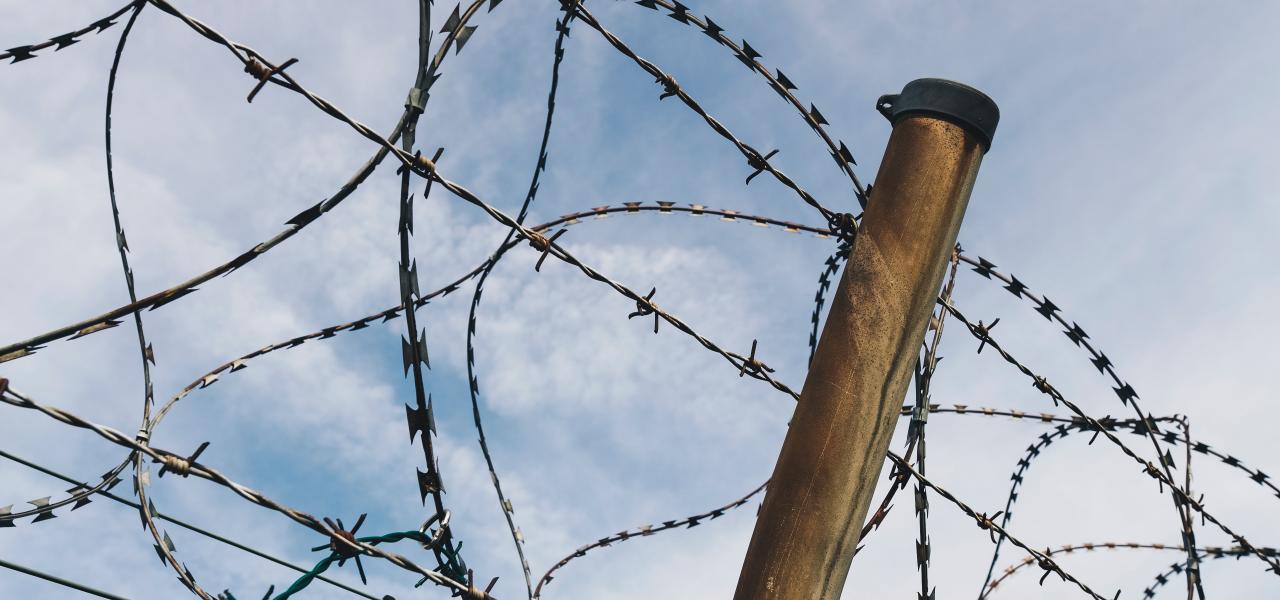
The concept of human rights stems from our evolution as a complex social species. It elevates our humanity by grounding it in the ideal of our shared humanity. It is a universalisation of the belief that members of our community should be treated consistently and fairly, rather than according to the dictates of power. Our understanding of ourselves as part of a global community gives this idea its fullest expression. Regardless of someone's location, class, physical attributes, beliefs, identity or even actions, we should all be entitled to a minimum level of dignity.
Human rights are both an individual and a shared responsibility. Progress on human rights is both one of the great tasks of human civilisation and one of the primary ways our ethical progress can be judged. When we ask questions such as "What is a good system of government?", "Who are the worthiest social leaders?" or "What are the best societies?" Maintaining and promoting human rights should be a primary part of the discussion.
Human rights are an ever-urgent issue. While the issues of each historical moment are different, it is only the scale of injustice that ebbs and flows over time and place. There has never been a point in history when oppression and suffering were absent from the world, nor sadly may there ever be. Although the arc of history appears to tend towards justice, this progress is uneven and incomplete. The threat or use of violence and oppression always lurks at hand as a tool with which people can control others, whether states, communities, groups, or individuals. It is unlikely we will end the ability or desire for people to do evil to others, and even if we could do so, we might worry that it would unreasonably restrict individual liberty. Order and freedom, the interests of the individual, communities and humanity always live in contention with each other. Given the dynamic and unpredictable nature of this contention, there is no singular and unchangeable path towards human rights. We must continually realign the balance between interests as our world changes.
The burden of advancing human rights should fall heaviest on those who are most free. Those who are oppressed face the greatest risk of fighting their oppressors. Despite the often heroic struggles such people undertake, they should not be left to rely only on their own resources. They should have confidence that their plight will not be ignored, that they can rely on the empathy, compassion and action of a worldwide movement united in a universal struggle for freedom and justice. Every privilege implies a responsibility to those far less privileged. Those in poverty should be helped by those who have more than they need, the silenced by those able to speak, the oppressed by the relatively free, the powerless by those who wield power.
There are motivational issues that must be overcome in societies where selfishness and lack of political engagement are often promoted as positive and even desirable attitudes:
- Lives less affected by suffering and injustice tend to be less urgently conscious of their presence in the world.
- Paying more attention to the suffering of others can be against our emotional self-interest.
- Helping others pay more attention to others' suffering is often unwelcome.
- Our senses bias us towards a focus on the experiences of our own lives and those nearest to us. It is not natural to consider broader political and philosophical issues.
- Empathy requires us to imagine ourselves in the place of others, but people's lives and struggles can be inconceivably different to our own.
- People take for granted their privileges, freedoms and material well-being, and cannot imagine them being taken away.
- Privileged people like to believe they are the agents of their own success. The corollary of this is often believing people who struggle are at least partially agents of their own troubles.
Given these challenges, creating an embedded concern for human rights is no simple task; it is unlikely to be motivated by rational self-interest, nor by people's instinctive moral circles. We must instead strive relentlessly to embed a concern for human rights deep within our cultural narratives. This requires a change from highly localised identities to a more intellectually interconnected and engaged culture, interweaving wider conceptions of society, history and ourselves.
The Universal Declaration of Human Rights
There is a long history of the discussion of human rights that we can draw on in formulating and deepening our own views. Embodying these currents of historical thought is an internationally agreed-upon document that sets out a firm platform from which to discuss human rights. The Universal Declaration of Human Rights was published in 1948, prompted by a world that had just endured war and social instability in the decades preceding it. For all of the suffering of that period, if humanity manages to survive much longer, we will look back on the Universal Declaration of Human Rights as a key moment in humanity's transition towards maturity. All United Nations members have ratified the Universal Declaration of Human Rights, though its articles are non-binding. To make these articles more tangible, there are related agreements that together cover most of the rights in the UDHR: the International Covenant on Economic, Social and Cultural Rights, the International Covenant on Civil and Political Rights, the Refugee Convention and the Convention on the Rights of a Child. The majority of countries have also ratified these, but must now take the step of embedding these principles into their constitutions and acts of parliament; in doing so all the world's people would have consistent, legally enforceable human rights.
The act of signing the Universal Declaration theoretically binds nations to act according to its principles. Many signatory nations, however, signed the UDHR only out of political convenience with no intention to reform their governments in line with its articles. This is a perpetual problem with many international agreements that lack plausible enforcement mechanisms. Regimes that deny their citizens rights in the declaration have suffered no economic repercussions. There are no automatic trade sanctions, tourists are unlikely to avoid them, investment will still flow if profits are available, and their elite classes live consumerist, jet-setting lifestyles even as some of their populations struggle. We need to create consequences for corruption and oppression by moving toward an international political and trade environment that strenuously encourages a commitment to human rights. Moral, economic and political force should be brought to bear on ruling elites who fail to act on behalf of their constituent communities.
Citizenship
We can talk about what change should happen, but it is just as important that we help make it happen. As citizens, we must make engaging with human rights part of our identity, and we should encourage this in others. We need to use our collective voices to encourage political action, to let our leaders know we expect their engagement with these issues. Our personal action should not only be aimed at helping alleviate current suffering but also at providing a supportive foundation for wider systemic change. While some human rights progress requires changes to the governing classes and structures of societies, there are many human rights concerns that are more immediately solvable. Donating to effective charities is perhaps the most direct and immediate way, especially to charities that have a structural and localised approach to solving issues. Our power does not begin and end with our vote and finances, however, and we can achieve more by embracing the power of social network effects. We can be a positive example to those around us by giving them a model of how to live a more ethical and compassionate life. We can engage and help others engage in individual action that harnesses the power of collectives. This can involve things like sending letters/emails, attending marches, boycotting, divesting and advertising our clear personal support. Perhaps the most powerful thing we can do is engage in volunteer work with organisations we believe are doing the most good in the areas of most concern. Some people deny the effectiveness of individual action, but it is the atomic foundation of all action. Systemic change can often only occur when a tipping point of individual action and example is reached. We each have an equally powerful responsibility to play a part in this.
Areas of Concern
While not an exhaustive list, Human Rights Watch lists the following areas of high-level human rights concerns:
- Arms
- Children's Rights
- Crisis and Conflict
- Disability Rights
- Economic Justice and Rights
- Environment
- Free Speech
- Health
- LGBT Rights
- Refugees and Migrants
- Rights of Older People
- International Justice
- Technology and Rights
- Terrorism / Counterterrorism
- Torture
- Women's Rights
Rights tend to progress in concert in most places, almost like societies develop a culture of human rights. Progress has been particularly strong in polities with functioning democracies and citizen participation. There is a high correlation with human rights and vibrant civil societies; these are societies which have elements such as diverse media, inclusive educational institutions, strong union movements, independent legal systems and strong institutional structures. In promoting human rights more widely, rather than direct political or even military meddling in other countries, it might be easier and more productive to encourage a more vibrant and peaceful civil society.
Human rights are not a monolith. There are unique and differing concerns in different countries. Some continue to deal with the legacy of colonialism, occupation, external threats, environmental conditions, or disproportionately disadvantaged subpopulations such as indigenous peoples. Wealthy countries have also often played negative roles beyond their borders; while they may have high levels of legally enforceable human rights for their own citizens, they have given financial, military, favourable trade and political support to corrupt and oppressive regimes in other countries. Even within an area of concern about human rights, the exact challenges might differ; in some areas, women might struggle against structural inequality and protection from intimate partner violence, where in other places these concerns might overlap with the right to work, have reproductive freedom, get a decent education or travel without a male guardian. While we should focus on the worst, most widespread and tractable human rights concerns, progress across all of these areas is vitally important, especially when we consider that progress is often viral as countries that show the possibilities and benefits of progress become models others can follow. History also shows us that we rarely have to make trade-offs and that rights progress in concert with each other, rarely at the expense of each other.
Becoming political
Like many global issues, human rights are complex, and we are each challenged to rise to this complexity.
If we wish to use our moral force for good in the world, the foundation must be in our knowledge and awareness. We must embark on lifelong education that seeks out what it means for people to be in the world, especially the world far beyond our daily lives. An essential part of fostering our better selves is ensuring our mental environment is conducive to that aim; that we are consuming information and culture worthy of being our moral guide. We must resist the distractions of entities that want to utilise our power and attention for their own ends, who wish to draw us towards nihilistic consumerism, sensationalism, entertainment, gossip, celebrity, political posturing, or nationalism. Making more conscious choices about our informational environment, making it more morally ambitious, is essential to claiming our individual ethical autonomy. Our thoughts, and therefore ourselves, are partly defined by the information we choose to consume. It takes an effort of will to break out of intellectual habits, but we must do the work required to become an ethical political agent in the world. There are many injustices about which it is too important to say we weren’t aware, especially when we consider that awareness itself is partly our conscious choice.
Once we have embarked on the journey of educating ourselves and ensuring our informational environment is keeping us informed, there are many other positive ways we can support human rights. We can be consistent advocates for human rights in our social circles and political communities. When we consume, bank or invest, we can do our best to ensure we do so ethically; that we aren’t supporting militaries, poor working conditions, environmental destruction, dictatorships and corporations preying on people, especially the poor and disadvantaged. We can join our voices in movements putting pressure on systems of power to further human rights, both within nations and internationally. Part of supporting movements for human rights is financially or socially supporting charities, independent media, non-governmental organisations and others working to uncover, alleviate and reduce human rights violations locally and globally. Many of these organisations do work that is vital to both short and long-term human rights progress - public education, research, alleviation of and resolution of conflict, documentation and investigation, psychological support and healing, medical care, increasing self-reliance, infrastructure and resilience. We should find a way to support these organisations, whether that be with our attention, time, money, voice, personal resources or whatever lies within our power and skills.
The political struggle of embodying human rights in our national and international governance organisations is vitally important. They are primary sources of power in our world. We generally have the strongest voice in the countries where we are citizens and voters. We can use our voice to encourage our governments to embody our ethics. We should be aware of our government’s positions towards human rights, including in other countries, and whether those positions align with ethical or other considerations. We should have a broad understanding of what aid our governments give and what it is used for. In studies where citizens of wealthy countries like the US, Britain and Australia are asked how much development aid their countries give, they often significantly overestimate the amounts. Surveys in the US show that the average person believes up to a quarter of the US national income is donated to foreign aid; the actual figure the US gives hovers around 1% or less. Many wealthy countries also give aid in ways that limit its long-term effectiveness or can even be harmful. This includes:
- Contracting corporations in donor countries to build mega-projects. This is a way of subsidising internal corporations in the guise of aiding other countries. Large projects provide more lucrative graft opportunities for corrupt local elites. If they do not employ local labour at all levels, they can create dependence and fail to build skills and self-reliance in recipient countries.
- Dumping excess national food production. Again, this is often a way of subsidising corporations in the donor country in the guise of aid. This feeds people in the target nation but destabilises local markets, local production, and food sovereignty with cheap or free foreign imports.
- Using aid primarily as a tool for political manipulation. Rewarding compliance with the donor nations' political agenda and being withdrawn to punish independent action. Donor countries often link aid to how recipient countries vote in international bodies.
- Giving money or loans to countries with corrupt leaders reinforces the power of their regimes.
- Loans are sometimes given with donors knowing that local elites will siphon off large portions of the money. Even after corrupt elites lose power, the citizens of poor countries are still expected to pay back monies that they received little benefit from. Many countries in the world spend over 10% of their national income purely on loan repayments.
Foreign aid has saved millions of lives, but it is important that the citizens of donor countries understand how much aid their countries give, whether they give it where it is most needed, whether it is used effectively, and what the effects of that aid are in recipient countries.
Poverty
We cannot talk about human rights without focusing on poverty and the many ills that flow from it. The extent of poverty in the world is an indictment of our collective morality and prevailing governing and economic structures. Global poverty reduction has shown remarkable improvement for decades; however, this progress is built on unstable foundations that may not continue. The primary current mechanisms for alleviating and reducing poverty are market expansion, government aid, charitable donations and wealthy philanthropy. These have collectively made a positive difference in billions of lives, indeed they have saved many lives, but they are also strongly tied to economic fortunes and the global economy. For this reason, we saw a stalling, and even a reversal of some indicators in this decade. Human lives are too important to leave up to the vagaries and changing fortunes of markets, political fashions or individual financial conditions. We need a structural, globalised plan and system for poverty reduction and alleviation in the near term, one that isn't reliant on economic growth, rising markets or individuals deciding to donate their fortunes.
There are different levels of poverty, with the most concerning being extreme/absolute poverty, where people lack basic resources such as food and clean water. Judging by the World Bank poverty figures for the period 1990 to 2022, there has been a very positive direction for extreme poverty. The numbers for extreme poverty, judged in 2025 as having incomes under $3.00 per day, show that over a billion fewer people live in absolute poverty in 2025 than in 1990. Improving the lives of the very poorest people should be a global priority, and the progress in this area has been an achievement of historic proportions. Whatever we have to say about the failure of markets or humanity's collective ethics that consign billions of people to live in extreme poverty, we cannot argue that we are collectively in a better place now than we were a generation ago. Of course, as someone who doesn't experience poverty, it is easier to celebrate these collective achievements, but they will bring less comfort to individuals still facing lives in extreme poverty.
Most of the reduction in extreme poverty has been the result of changes in government policy, particularly but not restricted to opening up markets. Major state investment to improve education, infrastructure and other internal social programs has taken place in the countries with the highest absolute numbers of poverty reduction: China, India, Vietnam, and Indonesia. Multinational corporations in the developed world, outsourcing their production, have driven some poverty reduction. They have moved jobs to less free, democratic and regulated countries where workers accept lower wages, poorer working conditions and unionisation is discouraged, restricted or state-controlled. In the wealthy countries exporting these jobs, many workers in the manufacturing sector were thrown into long-term unemployment. Over time, the job market in these developed countries readjusted, and unemployment fell, particularly from greater spending on service industries, although this outsourcing of manufacturing resulted in a lasting climate of inequality, greater job insecurity and rural decline. Again, the overall trends have been positive, but each life has an importance of its own, and we cannot be too quick to subsume individual lives into wider figures.
Above extreme levels, the outlook for people in poverty, people who face food and housing insecurity and lack access to services, is less positive. The poverty level in middle-income countries is $6.85, home to 75% of the world's population. Absolute numbers at this poverty level have fluctuated between 1990 and 2022, rising from 3665 million people at the start of this period, peaking in 2003, before starting a gentle decline to the most recent figure of 3574 million people, a positive reduction but only a fraction of what the global community is capable of. The world population increased by 2 billion people during these decades, so the percentage of people in poverty has improved more than the absolute number of people in poverty. Boosters for capitalism tend to prefer to quote percentages rather than mention absolute numbers and poverty more widely. It is a complex question to ask whether, in a world where 1 in 10 people live in extreme poverty, it is a victory to increase the world population by a billion people while increasing the number of people in extreme poverty by 90 million. But this is the logic of percentage improvements.
The World Bank estimates that in 2025, 800-838 million people, or around 10% of the global population, will remain in extreme poverty. Their recent report on poverty also mentions that there has been a concerning decline in progress over the current decade. There is no coherent plan that requires the global community to reduce this number. Instead of a plan, we are essentially crossing our fingers and hoping markets can find a way to make a profit from the remaining poor. Advocates of capitalism, who count among their number many of the super-rich, are happy to take credit for any and all improvements in human living standards in recent centuries while disavowing responsibility for any problems. Of course, we should be careful of taking too seriously the economic ideas of the wealthy who have little skin in the game. The 2008 financial crisis threw millions of vulnerable people into extreme poverty. At the other end of the scale, some very wealthy people booked long holidays in exotic destinations while waiting for better market conditions to return.
The World Bank is clear about the current trends for poverty alleviation: "If growth does not accelerate and become more inclusive, it will take decades to eradicate extreme poverty and more than a century to lift people above the $6.85 per day poverty line". An over-reliance on economic growth or technological innovation to drive this change leaves the world's poor in a perilous situation.
Inequality
From poverty, we naturally turn to inequality. There are complex discussions about whether inequality is inherently immoral so long as the poorest in a society lead decent lives; there is little doubt that levels of inequality are immoral when they mean gluttony for some and absolute poverty for others, yet this is the global status quo.
The richest half of humanity owns 98% of global wealth. Concentrations of wealth and power get ever more exaggerated as we focus on the wealthiest top 10%, 1%. and 0.1%. The basis of high levels of wealth is almost always social. Individuals alone cannot accumulate such quantities of resources. For high levels of wealth to be realisable, they are usually built upon a complex material and social infrastructure. The romantic ideal of the self-made wealthy individual might be seen as harmless enough if it weren't used to justify limiting social welfare policies. Society should tax the wealthy at least proportionately to the benefits they receive from society. There is a strain of thought, at its most popular and callous in the works of Ayn Rand, that wealthy individuals are the sole driving force of society. As a thought experiment, we might imagine that a given wealthy individual decides to renounce their wealth and become a mendicant monk. How likely is it that society would be substantially affected by this event? The most likely outcome is that some other competent and qualified individual would take their place, and society would continue largely the same. Like the celebrity or famous sports person, some shine more brightly during that time than others, but once their time has gone, the institutions they are part of roll on largely as before with a new set of faces. Perhaps some particularly visionary entrepreneurs might bring society forward a few years in some particular space,
Much-publicised commitments of ultra-wealthy people to give away parts of their wealth in later life are welcome, but the backdrop of this is the wealthy's much more extensive ongoing manipulation of political systems to serve their class interests. Taxation and redistribution are the best long-term structural guarantees of material well-being, yet over recent decades, while inequality has risen, the wealthiest sections of society have seen a reduction in their tax burden. This has come from the wealthy's exaggerated influence over politics via political donations, their funding of special interest groups and think tanks, and their natural employer and financial power over economies. Inequality is a spiral; those accruing power and resources at the same time accrue a greater ability to manipulate the political system towards their own interests. To support political and legal equality, one should also support limiting material inequality. The result of inequality is not just that some people have fewer resources than others; it is that their political and legal voice is proportionately diminished. We see the results of political inequality in laws that worsen the effects of material inequality; regressive taxes, flat taxes, defunding of public services, attacks on unions, political disenfranchisement, monopolisation and so on.
One area of political ideological conflict is the preference for different rights and responsibilities over others. Some conservatives tend to see property rights as prevailing over all other rights and duties, even to the point of denying the poor the basic necessities of life. One can look at conservative attitudes to health care in the United States for an obvious example of this callous selfishness. The more liberal end of the spectrum can make the opposite mistake - not all property is theft, as Proudhon famously wrote. The right for people to be able to improve their lives through the fruits of their endeavour is an important and progressive motivator. Markets should be as free as possible, but no freer. There are many things that shouldn't be tradable or relinquishable by the market, such as human and animal rights, and environmental sustainability. Power, including economic power, can only be justified when it provides fundamental levels of social and environmental well-being, before utilising any available surplus to reward individual endeavour.
Inequality between nations is also an ongoing concern. The idea that our obligations towards each other end at national boundaries is widely held.
Climate change and many other environmental problems exacerbate inequality and human rights issues because they disproportionately affect the poor and poorer regions of the world. Our goal must be to find economic equality within the Earth's environmental carrying capacity.
Conclusion
Universal human rights are one of the greatest and most urgent tasks of humanity. Major progress towards this goal has happened in our lifetime through the combined struggle and efforts of millions. Significant further progress is still necessary before we can begin to console ourselves with the idea of living in a just world. Whilst so much preventable suffering and injustice go on in our world, a person cannot passively stand by and claim neutrality. For those of us with relative freedom or material well-being, the responsibility to act is the heaviest. Morality is about what we do but also about what we fail to do. The poor, the oppressed, the downtrodden and all those who care about the upliftment of the human spirit have awaited a fairer world for too long.
Human rights embrace the meaning of our lives. For many of us, the extent of our own well-being will be limited until we can make significant progress towards universal human rights. When we ponder the world, ourselves and our place amid existence, how we feel is bound up in the lives and experiences of others. Human rights focus on the victims of injustice, but feeling we live in a just world and the flourishing enabled by such a world is something we will all share the benefits of.
–
No man is an island entire of itself; every man
is a piece of the continent, a part of the main;
if a clod be washed away by the sea, Europe
is the less, as well as if a promontory were, as
well as any manner of thy friends or of thine
own were; any man's death diminishes me,
because I am involved in mankind.
And therefore never send to know for whom
the bell tolls; it tolls for thee.
- John Donne